


A Headless CMS is a modern content management approach that separates content creation from how it is displayed. If you’re wondering what a headless CMS is, it simply means content is stored in one central place and shared across websites, mobile apps, and other digital platforms using APIs. Unlike traditional systems, it allows content to be reused anywhere without being tied to a single website design. This makes it easier for brands to scale, improve performance, and adapt to future technologies. Understanding what is a headless CMS helps teams focus on creating quality content while delivering faster, more flexible digital experiences. In this article, readers will gain a clear understanding of Headless CMS, its benefits, real-world use cases, and how it can support long-term content and digital growth.
What is a Headless CMS?
It is a modern content management system built for flexibility and scale. If you’re asking what is a headless cms, it simply means content is created and stored in one central place without being tied to a specific website design. This setup allows the same content to appear on websites, mobile apps, and other digital platforms. Learning what is a headless cms helps businesses move faster, update content easily, and stay consistent across channels.
To explain further, what is a headless cms becomes clear when you look at how it works behind the scenes. Content is delivered through APIs, which makes sharing faster and more reliable. The headless cms meaning focuses on freedom, speed, and future readiness. In short, it is a smarter, scalable way to manage content in a digitally focused world.
The Rise of Headless CMS
As the internet grew beyond simple websites, businesses needed a better way to manage content across many platforms. This shift led to the rise of headless CMS, designed to keep content flexible, fast, and future-ready.
Here’s a simple explanation of its origins:
Limits of traditional content systems
Earlier CMS platforms tied content and design together, which made updates slow and complex. Even small changes often required technical help and extra time. These issues pushed businesses to rethink what is a headless cms and look for a simpler structure that offered more freedom.
Separation of content from presentation
It stores content in one place and sends it to different platforms using APIs. This made it easier to reuse content without redesigning it each time. This approach clearly shows what is a headless cms and why it removed many old limitations.
Growing need for content everywhere
With mobile apps, websites, and smart devices growing fast, brands needed one content source for all channels. This is headless cms explained in everyday terms and helps newcomers see what is a headless cms in real life.
The Advantages of Implementing a Headless CMS
It offers a modern way to manage content without technical confusion. It helps businesses stay flexible, fast, and ready for change. To understand its benefits, knowing what is a headless cms makes everything clearer. The points below explain its advantages in a simple, beginner-friendly way.
Flexible content reuse
Content is created once and can be reused across websites, mobile apps, and other digital platforms. This approach saves time, reduces repeated work, and keeps messaging consistent everywhere. Teams can update content in one place and see changes reflected instantly without rebuilding pages or designs.
Faster digital experiences
Developers are not restricted by fixed templates or outdated structures. They can use modern tools to build faster, smoother experiences for users. This results in quicker page loads, better performance, and higher user satisfaction.
Multi-channel content delivery
Content flows from a single source to websites, apps, smart devices, and more. This clearly shows what is a headless cms in real-world use. Brands maintain consistent content and tone across all platforms without extra effort.
Easy scalability
The system grows easily as business needs expand. New features, channels, or regions can be added without disrupting existing content. This flexibility lowers long-term risk and supports steady growth.
Better team collaboration
Content creators and developers work independently without blocking each other. Writers focus on messaging while developers manage structure and design. This is headless cms explained in a simple and practical way.
Future-ready structure
New technologies and platforms can be connected whenever needed. The system adapts without major changes or delays. This clearly reinforces what is a headless cms for modern content needs.
How Headless CMS Delivers Content
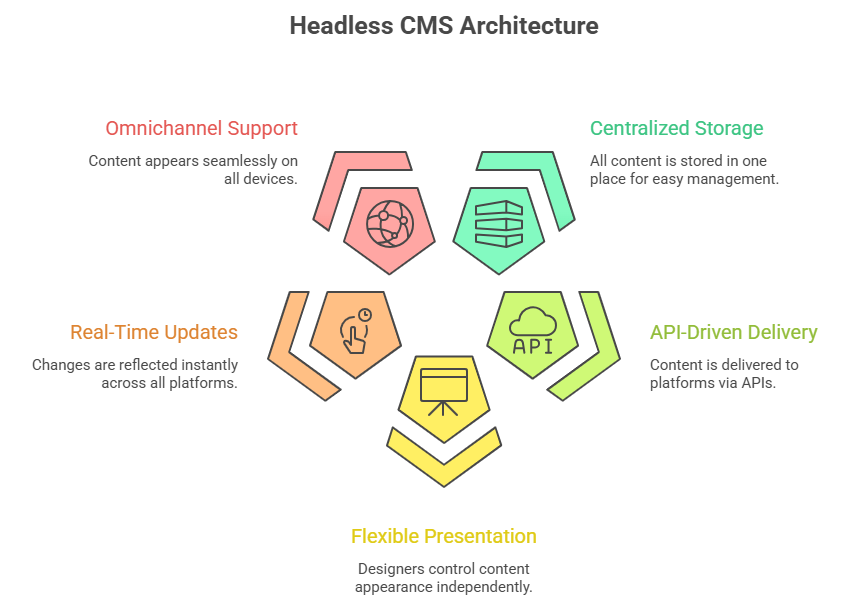
It changes the way content is managed and delivered by separating content from design. Instead of being tied to a website, content can be shared across multiple platforms like apps, websites, and devices.
- Centralized content storage
A headless CMS keeps all content in one central place. This makes it easy to update text, images, or videos once and use them everywhere. This is the first step to understanding what is a headless cms in real use. - API-driven delivery: Content is sent to different platforms through APIs, which act like a bridge between the content and its display. This ensures the same content appears correctly on websites, apps, and other devices. Knowing this shows clearly what is a headless cms and how it delivers content efficiently.
- Flexible presentation layer: Designers and developers control how content looks separately from the content itself. You can create unique layouts for each platform without touching the stored content. This practical method explains what is a headless cms in an everyday, easy-to-understand way.
- Real-time updates: When content is updated in the headless CMS, all connected platforms reflect the changes immediately. This reduces errors and keeps information consistent across channels. This feature highlights what is a headless cms and why it is so reliable for businesses.
- Supports omnichannel experiences: Content can seamlessly appear on websites, mobile apps, smart devices, and more. This ensures customers get a consistent experience no matter where they interact with the brand.
By combining centralized content, API delivery, and flexible design, a headless CMS clearly demonstrates what is a headless cms and how it transforms content management for modern businesses.
Headless CMS vs Traditional CMS: Simplified Comparison
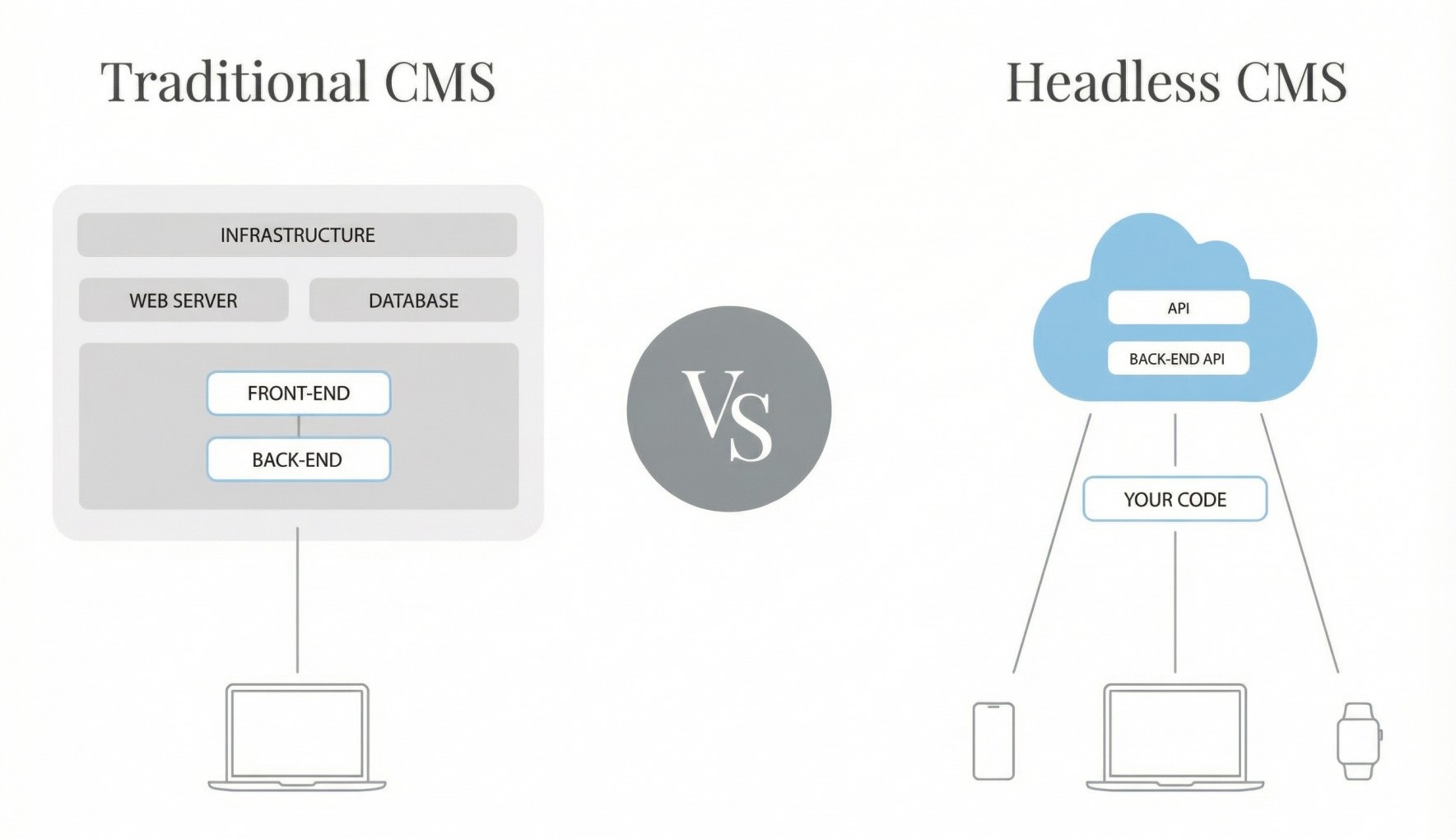
Choosing the right content management system requires understanding the main differences between headless cms vs traditional cms. Both handle content, but they deliver and manage it in very different ways.
Here’s a simple comparison to make it easy to understand what a headless cms is:
- Content and presentation
Traditional CMS ties content directly to website design and templates. Every change often requires adjusting the design. In contrast, a headless CMS separates content from design, giving full control over how and where content appears. - Flexibility and scalability
Traditional CMS works well for single websites but struggles with multiple platforms. Headless CMS allows content to flow to websites, apps, and devices simultaneously, making it ideal for growth. - Development speed
Updating or redesigning in a traditional CMS can be slow due to template restrictions. Headless CMS lets developers work independently of content, speeding up launch times. - Omnichannel delivery
Traditional CMS mostly serves websites. Headless CMS delivers content to websites, mobile apps, smart devices, and more, ensuring a consistent experience everywhere. - Future readiness
Traditional CMS may require major changes to adapt to new technologies. Headless CMS is built to integrate with new platforms easily, keeping businesses ready for the future.
In short, headless CMS offers flexibility, speed, and multi-platform support, while traditional CMS remains more suited for single-site management.
The Growing Need for Headless CMS
As digital experiences expand beyond traditional websites, businesses are rethinking how content is created, managed, and delivered. This shift has led to a strong rise in the adoption of headless CMS solutions. To truly understand this trend, it’s important to first grasp what is a headless CMS and why it fits the needs of today’s fast-changing digital environment.
Content Must Work Across Multiple Digital Channels
Today’s audiences interact with brands through websites, mobile apps, smart TVs, voice assistants, and more. A headless CMS allows content to be created once and delivered everywhere through APIs. When people ask what is a headless CMS, this multi-channel flexibility is one of the most valuable answers. It ensures consistent messaging across all platforms without extra effort.
Faster Content Updates and Time-to-Market
Speed matters more than ever. Traditional systems often slow teams down with rigid structures. Headless CMS removes these limitations, allowing content teams to publish updates instantly without waiting on developers. This flexibility helps businesses respond quickly to market changes, trends, and customer needs.
Greater Freedom for Developers and Designers
One major reason behind the growing demand is creative and technical freedom. Headless CMS lets developers use modern frameworks and tools without being restricted by the CMS backend. This is another reason understanding what is a headless CMS is important: it supports innovation while keeping the content system stable and organized.
Improved Website Performance and User Experience
Performance directly affects engagement and trust. Headless CMS delivers content through lightweight APIs, which helps pages load faster and perform better across devices. Faster load times improve user experience and support stronger SEO outcomes, making it a practical choice for growth-focused businesses.
Easier Scalability for Growing Businesses
As businesses grow, their content needs increase. Headless CMS platforms are built to scale smoothly, whether traffic spikes suddenly or new digital platforms are added. This makes it easier to expand without rebuilding the entire system, saving time and long-term costs.
Key Takeaways
This guide explains what is a headless CMS and why it is becoming the future of content management for modern businesses. Readers learned how it separates content from design, allowing teams to reuse content across websites, apps, and emerging digital platforms with ease. The article highlighted its core advantages, including faster updates, better performance, improved collaboration, and effortless scalability. It also showed how API-driven delivery enables consistent, omnichannel experiences while keeping systems future-ready. Compared to traditional CMS, headless CMS offers greater flexibility and long-term value in a digital-first world. At its core, understanding what is a headless CMS helps businesses simplify content management, prepare for future technologies, and take a confident step toward faster, more scalable digital experiences.
Visit Skill Freedom Hub to get more insightful and valuable content and tips to get started with your blogging journey with ease and fulfill your dream of side hustling leading to financial freedom.
FAQ’s
What is a commonly used headless CMS platforms list?
Platforms list includes Contentful, Strapi, Sanity, Prismic, Storyblok, Hygraph, Ghost, Directus, and Kentico Kontent. These platforms support API-driven content delivery and multi-channel publishing. Each offers different strengths based on flexibility, scalability, and ease of use suggests webstacks.
Who benefits most from using a headless CMS?
Companies that publish content across multiple digital platforms benefit the most. It’s ideal for enterprises, eCommerce businesses, and any organization looking to scale their content efficiently. Even small teams can take advantage of its flexibility and speed.
What are the best types of headless CMS platforms?
The best types of platforms include API-first CMS, cloud-based, open-source headless CMS, enterprise-grade CMS, and hybrid CMS solutions. Each type is designed to support different business sizes and technical needs. Choosing the right one depends on scalability, flexibility, and control requirements.
Why do businesses use a headless CMS?
Businesses use it to reach audiences on multiple channels efficiently. It reduces repetitive work, ensures consistency across platforms, and allows teams to update content instantly. It’s particularly useful for growing brands with complex digital operations
Can a headless CMS improve SEO?
Yes. Faster content delivery and improved site performance enhance search engine rankings. The flexibility to structure content for different platforms also allows businesses to optimize for multiple search channels effectively.